


Terms of Use and Privacy Policy
for 360Compliance
Last Updated: 4.12.2025
Welcome to the official website of 360Compliance (“Company”, “we”, “us”, or “our”).
By accessing and using this website (“Site”), you agree to the following Terms of Use and Privacy Policy.
We may update this document from time to time and encourage you to review it periodically.
1. Ownership & Intellectual Property
All copyrights, trademarks, database rights, layout, design elements and any other intellectual property on this Site are owned by us or licensed to us.
You may view and download content solely for personal, non-commercial use.
You may not copy, modify, publish, transmit, distribute, resell or create derivative works without prior written approval from the Company.
2. Disclaimer
All information on this Site is provided in good faith and for general informational purposes only.
We make no warranties regarding completeness, accuracy, reliability, or suitability.
Use of the Site is at your own risk.
To the fullest extent permitted by law, 360Compliance disclaims any liability for damages or losses arising from Site usage or reliance on information provided.
Your sole remedy for dissatisfaction is to discontinue use of the Site.
3. Limitation of Liability
Under no circumstances shall 360Compliance be liable for any direct, indirect, incidental, special, punitive, or consequential damages arising from access, use, or inability to use the Site – even if advised of the possibility of such damages.
4. What Personal Data We Collect
We collect only the minimum personal data necessary and only when voluntarily provided by you:
- Name
- Email address
- Phone number
- Any details submitted in contact forms or registrations
Additional data may be collected automatically:
- IP address
- Device and browser data
- Usage and interaction data
No collection of unnecessary information is conducted.
5. How We Use Your Data
We process personal data solely for the following lawful purposes:
- Responding to contact requests and communication initiated by the user
- Registering participation in webinars, conferences, or services
- Sending informational updates or newsletters when consent is provided
- Improving Site performance and user experience
- Meeting legal and regulatory obligations (e.g., tax, financial records)
You may withdraw your consent at any time by contacting us.
6. Tools Used on This Site
We use analytics and service-improvement tools such as:
- Google Analytics
- Microsoft Clarity
These tools help us understand Site usage patterns and optimize performance.
Data collected by third-party tools may be stored and processed by them according to their own privacy policies.
We do not receive personally identifiable data from these tools.
7. Use of Cookies
The Site uses Cookies for:
- Functional operation of the Site
- Analytics and performance optimization
- Saving basic user preferences (if applicable)
Upon first visit, a cookie notice is displayed as required by law.
You may block or delete cookies via browser settings.
8. Data Storage & Security
Data may be stored on secure external hosting providers such as Google or Amazon.
Access to internal systems such as CRM and mailing platforms is protected by passwords and restricted only to authorized personnel.
Despite reasonable safeguards, no method of online transmission or storage is fully secure.
9. Data Sharing with Third Parties
We do not sell or trade personal information to third-party advertisers.
Personal data may be shared only when:
- Required to deliver requested services
- Required by law or a regulatory obligation
- Necessary for secure technical operation (e.g., email services, CRM)
Any such sharing will be minimal and lawful.
10. Data Retention
We retain personal data only as long as necessary to fulfill the purposes described in this document or as required by law.
Statistical aggregated information, which does not identify users, may be retained without limitation for research and product improvement.
11. Your Rights
You may contact us to:
- Request access to your personal data
- Request correction of inaccurate data
- Request deletion of your data (subject to legal requirements)
We will respond within timeframes required by law.
12. Updates to This Policy
We may update this document when legal, operational, or technological changes occur.
Revised versions become effective upon publication on this page.
13. Contact Information – Data Protection Officer
For any privacy inquiry or rights request, you may contact:
360Compliance Privacy Office
Email: contact@360compliance.co
Address: Haseora 56, Binyamina, Israel
Website:https://360compliance.co/
Other Certifications

CE Certification
Why is CE Certification Important? CE certification confirms that the product entered the market legally, has all the permits, and does not pose any threat to human health or the safety and integrity of the environment. Thus, the CE mark signals both buyers and official regulators about the successful completion of all testing and certifying procedures. What Countries Require CE Marking? The mandatory CE certification applies to products entering the market of all 30 countries of the European Economic Area (EEA). It also covers Switzerland and Turkey, the United Kingdom, which have signed a number of bilateral agreements with the EU, including the CE marking requirement. Additionally, the UK indefinitely recognizes the EU's CE mark for various manufactured goods placed on the UK market. What Products Need a CE Certification? To determine whether a product requires CE Certification, manufacturers should consult the relevant EU directives and harmonized standards. Notified bodies, independent organizations authorized to assess product compliance with EU directives, can also provide guidance. Product Category Examples Electrical equipment Household appliances, power tools, lighting, cables Toys Dolls, action figures, toy cars, construction sets Machinery Industrial machinery, agricultural machinery, construction machinery Medical devices Surgical instruments, implants, diagnostic equipment Construction products Cement, steel, windows, doors Personal protective equipment Safety helmets, goggles, gloves, boots Pressure equipment Gas cylinders, boilers, pressure cookers Gas appliances Cookers, heaters, gas water heaters Aerosols Spray paint, deodorants, insecticides Telecommunications equipment Mobile phones, routers, modems Radio equipment Radios, televisions, Bluetooth devices Lifts Escalators, elevators, dumbwaiters Explosive devices Fireworks, detonators, ammunition What Products Do Not Require a CE Marking? Not all products imported into the listed countries require CE marking certification. In particular, goods belonging to the following categories, which are covered by other Directives, are subject to a different type of certification: Chemical products Cosmetics Food products Pharmaceuticals How to Obtain CE Certification? Obtaining a CE certificate involves a systematic process: Identify Applicable Directives The Directives include general safety requirements for products placed on the market. The specific parameters and technical requirements are detailed in the harmonized standards. If a product does not fall under any Directives requiring CE marking, it must still comply with a document outlining general safety requirements. Directive Number Product Category 2014/35/EU Low Voltage Directive (LVD) 2014/30/EU Electromagnetic Compatibility (EMC) 2011/65/EU Restriction of Hazardous Substances (RoHS) 2014/53/EU Radio Equipment 2014/34/EU Equipment and Protective Systems for Use in Explosive Atmospheres (ATEX) Regulation (EU) 2017/745 Medical Devices Regulation (EU) No 305/2011 Construction Products 2006/42/EC Machinery Regulation (EU) 2016/425 Personal Protective Equipment 2014/31/EU Non-automatic Weighing Instruments Regulation (EU) 2016/426 Appliances Burning Gaseous Fuels 2014/28/EU Explosives for Civil Uses 90/385/EEC Active Implantable Medical Devices 98/79/EC In Vitro Diagnostic Medical Devices 2014/90/EU Marine Equipment Directive 2013/53/EU Recreational Craft 2014/33/EU Lifts 2014/68/EU Pressure Equipment Regulation (EU) 2016/424 Cableway Installations to Carry Persons 2014/32/EU Measuring Instruments 2013/29/EU Pyrotechnic Articles Full list of CE directives you can find here Identify the requirements for the product Each Directive specifies essential requirements that a product must meet. To demonstrate conformity, manufacturers must identify applicable 'harmonized European Norms' (hENs), which are standards that offer a presumption of conformity to the essential requirements. These standards vary depending on the product's classification and intended use. Harmonized standards, available on the European Commission’s website, simplify compliance through clear frameworks. Determine if third-party assessment is needed Certain directives may require third-party assessment by a Notified Body (NB), an organization authorized by European authorities. For example, the Medical Devices directive and others mandate the use of an NB. However, the EU has reduced the number of products requiring NB assessment, placing more responsibility on manufacturers. Assess Product Conformity Conduct a thorough assessment of your product to ensure it conforms to the essential requirements outlined in the relevant directives. This step may involve testing and verification processes to demonstrate that your product meets the necessary safety and environmental standards. Compile a Technical File Create a comprehensive technical file that documents every aspect of your product's design, development, and manufacturing process. This technical file, also known as the Technical Construction File, should include technical descriptions, drawings, circuit diagrams, bills of materials, specifications, test reports, and other relevant information. The file serves as evidence of conformity and must be maintained for up to 10 years after the last unit is manufactured. Make a Declaration And Affix The CE Mark When satisfied that the product conforms to the applicable CE Marking Directives, the manufacturer must complete a Declaration of Conformity. It includes information about the product, directives, standards applied, and the responsible party in the company. Following this, affix the CE mark visibly on the product, signaling compliance with EU standards. This is the final stage, after which the product may be launched to the EU and EEA markets. Responsibility of Manufacturers for CE Certification To complete the standard procedure for obtaining the CE mark, manufacturers must find out which EU Directive regulates the access of products of their category to the market and check compliance with all regulations. After that, a conformity assessment is carried out, based on which a technical file is prepared. Further, the EU-authorized body examines the documents, and the manufacturer issues the EC Declaration of Conformity (DoC). When all documents are certified and the CE mark is received, the manufacturer can label with this mark their products and packaging. Responsibility of Distributors for Products with a CE Mark Distributors of goods in the EU market must ensure that the CE conformity mark has not yet expired and that the certificate itself is not fake. They also check the placement of the stamp on the product or its packaging since marking is the responsibility of the manufacturer. What Are the Benefits of CE Certification? There are several advantages to CE certification, including: Free movement of goods within the EEA Allows manufacturers to freely circulate their products within the EEA without facing additional technical barriers to trade. Increased market access CE certification can help manufacturers gain access to new markets in the EEA, as well as in other countries that recognize the EC marking. Enhanced product safety Helps to ensure that products meet high standards of safety and environmental protection. Improved consumer confidence CE certification indicates independent compliance with EU safety requirements, boosting consumer confidence. Become CE Certified with 360Compliance The CE marking procedure can be tedious and incomprehensible to non-professionals. However, the 360Compliance team will help you pass all stages of certification quickly, competently, and successfully. You will receive full project management with no hassle. You are also guaranteed technical support and a transparent pricing policy. To start the testing & certification process for obtaining a CE stamp, contact the 360Compliance team in any convenient way and get all the answers and instantly initiate the certification procedure. Frequently Asked Questions About CE Marking For How Long is a CE Certificate Valid? For each product group, a certain validity period is established, but in most cases, it is 3 years. After that, you need to go through the re-certification procedure. However, there are products for which the CE label is valid for 10 years or more. What are the Penalties for the Absence of a CE Compliance Certificate? Punishment for selling goods without the certificates in countries where the CE marking is mandatory varies widely from administrative to criminal liability. The specific article of the law that will be applied depends on the damage that a given product can cause to people or the environment. How to Get a CE Certificate? To obtain the CE stamp, it is necessary to go through a risk assessment procedure for the products offered. For this, you need to study the standards of the specific Directive that regulates access to the market for this type of products, make up a technical file, and pass testing. When all permits are issued, CE marking can be applied to the offered products. How to Authenticate a CE Certificate? You can authenticate a CE label using the official database. Also, it is possible to contact the official authority that issued the certificate and request details on this product. If it turns out that this product is not registered with official institutions, you are dealing with fake certification.
Learn more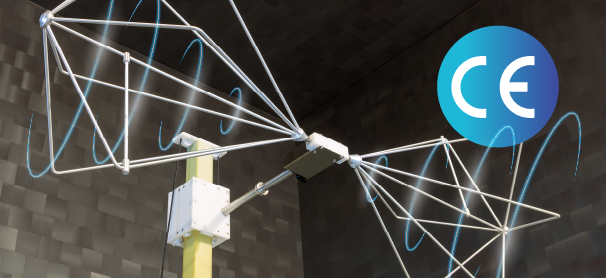
EMC Directive 2014/30/EU
Do you manufacture or sell electrical or electronic equipment in the European Union (EU)? If so, you'll need to ensure your products comply with the Electromagnetic Compatibility (EMC) Directive 2014/30/EU. Wondering how you can streamline the compliance process to ensure your products meet the EU's stringent electromagnetic compatibility requirements? 360 Compliance is here to guide you through every step, ensuring your products not only comply but thrive in the European market. What is CE EMC Certification? CE EMC Certification is a mark that indicates a product's compliance with Electromagnetic Compatibility (EMC) requirements in the European Union. EMC is crucial because electronic devices emit electromagnetic waves during operation, and without proper EMC measures, these emissions can lead to Electromagnetic Interference (EMI). The CE mark, which stands for Conformité Européenne, is a mandatory certification for products sold within the European Economic Area (EEA). It signifies that a product meets the essential EMC standards set by the European Union to ensure that it won't cause or be susceptible to electromagnetic interference. This interference could affect the proper functioning of other nearby electronic devices. The certification process is guided by Directive 2014/30/EU, which outlines the specific EMC requirements that products must meet to obtain the CE mark. This directive establishes the legal framework for electromagnetic compatibility and mandates that manufacturers thoroughly test their products for compliance. The goal is to guarantee that electronic devices can coexist harmoniously in the European market without causing disruption or compromise in functionality. Which Products Need the CE EMC Mark? If your product falls into the category of devices that can emit electromagnetic waves during operation, it likely requires the CE EMC mark. Here are some examples of products that typically need this certification: Electrical Appliances: Household appliances such as washing machines, refrigerators, and microwave. Information Technology Equipment: Computers, laptops, servers, and networking equipment. Consumer Electronics: This includes a broad range of devices like televisions, audio equipment, and gaming consoles. Medical Devices: Equipment used in the medical field, such as diagnostic machines and monitoring devices. Telecommunications Equipment: Phones, routers, and other communication devices. Industrial Machinery: Various types of machinery used in industrial settings, like manufacturing equipment and automation systems. Lighting Products: From simple light bulbs to complex lighting systems. Electronic Toys: Children's toys that incorporate electronic components or emit electromagnetic signals during play. Why is EMC Directive Important? Ensuring Market Access: Legal Compliance: CE EMC Certification is a legal requirement for placing products in the EU market. Non-compliance can result in serious consequences, including fines and withdrawal of products from the market. Enhanced Market Credibility: Products with CE EMC Certification signal adherence to high-quality standards, enhancing your brand's credibility and customer trust. Quality Assurance: Product Reliability: EMC Certification ensures that your products can function in the presence of electromagnetic disturbances, making them more reliable. Reduced Interference: Certification reduces the risk of your products causing interference with other electronic devices, preventing potential issues for end-users. How to Get CE EMC Certification? Step-by-Step Guidance: Consultation: Initiate the process with a consultation to understand your product and specific certification needs. Pre-assessment: Identify potential EMC issues and address them before formal testing to expedite the certification process. Testing and Evaluation: Utilize our accredited laboratories for comprehensive emissions and immunity testing. Documentation Support: Our team assists in preparing the necessary technical documentation required for certification. Declaration of Conformity: Once certified, we help you issue the Declaration of Conformity and affix the CE mark to your product. How long will testing take? The EMC CE certification procedure takes 4 to 6 weeks on average. If the product belongs to an industry that is regulated by other directives (e.g. CE RED), it is subject to additional tests, which increases the time required. Manufacturer's Responsibilities Related to EMC CE Certification The company that develops a product shall design it according to EMC CE norms and confirm compliance with the norms by independent laboratory tests. It is also required to: indicate the actual electromagnetic radiation level in the documentation; warn about the possible hazards associated with the use of the device; provide the user with operating instructions; indicate geographical restrictions on the use of the product, if any; keep a register of complaints; store certificates and declarations of conformity for at least 10 years; cooperate with local authorities and provide product samples to the authorities. Quick and Easy EMC CE Certification with 360Compliance Obtaining CE EMC Certification is not just a regulatory obligation; it is a strategic move to ensure your products' quality, compliance, and market competitiveness. By investing in certification, your business can access new markets, build trust with customers, and stay ahead in the dynamic world of electronics. At 360Compliance, we simplify the process, offering expert guidance and tailored solutions to ensure your products meet the highest standards of electromagnetic compatibility. Contact us to get transparent pricing, clear timelines, and technical support at all stages of the procedure.
Learn more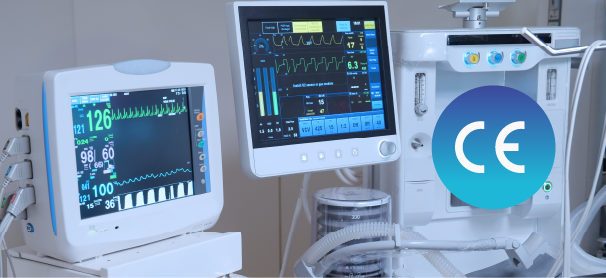
CE Mark Medical Device
Do you manufacture or plan to sell medical devices in the European Union (EU)? If so, obtaining CE marking for medical devices is essential for legal market access. This signifies compliance with the Medical Devices Regulation (MDR) 2017/745. Looking for a partner to demystify the CE marking process and ensure your medical devices comply with EU regulations? At 360Compliance, we're here to provide guidance and support to address any questions you may have. What is CE MD Certification? CE MD certification is a mandatory requirement for all medical devices that are sold in the European Union. The CE mark is a symbol that indicates that a product has met all of the applicable EU directives and regulations. To obtain CE marking for medical devices, manufacturers must adhere to the regulatory framework outlined in the Medical Devices Regulation (MDR) or the In Vitro Diagnostic Regulation (IVDR). The primary objective of CE approval for medical devices is to ensure the safety, effectiveness, and alignment with the needs of patients and healthcare professionals. The process is regulated by EU Directive 2017/745 and relevant industry regulations, including 90/385/EEC, 93/42/EEC, 98/79/EC, and 722/2012. Which Products Require MDR CE Marking? CE MD marking is mandatory for a wide range of medical devices, including but not limited to: Diagnostic Equipment; Implants; Surgical Instruments; Monitoring Devices; Dental Products; Rehabilitation Equipment. Manufacturers must ensure their products align with specific classifications and requirements outlined in the applicable directives. Which products do not need the CE mark medical device? CE medical device certification is unnecessary if the product does not meet the definition of a medical device outlined in EU Directive 2017/745 (MDR). In that case, other industry regulations, like those governing radio frequency or electromagnetic radiation, are applicable. Additionally, products can be sold without a CE certificate if alternative standards have been set for them, as seen with medicines, food products, cosmetics, and chemicals. CE Certification Process for Medical Devices The CE certification process for medical devices involves several key steps: Legal Requirement CE marking is mandatory for medical devices under the EU Medical Devices Regulation (MDR) or the In Vitro Diagnostic Medical Devices Regulation (IVDR), depending on the nature of the product. Conformity Assessment To obtain CE marking, manufacturers must undergo a conformity assessment, which involves demonstrating that the medical device complies with the relevant essential requirements and standards. Particularly the IEC 60601 series, which specifically addresses the safety and essential performance of medical electrical equipment. Classification of Devices Classifying devices involves categorizing medical devices into different classes based on their risk level. The classification determines the conformity assessment procedure that the manufacturer must follow. Technical Documentation Manufacturers must create and maintain technical documentation supporting the conformity of the medical device. This documentation should cover aspects such as design, manufacturing, risk assessment, and labeling. Notified Bodies In many cases, a Notified Body, an independent third-party organization, is involved in the conformity assessment process. The Notified Body assesses the technical documentation and issues a certificate if the requirements are met. Post-Market Surveillance CE marking is not a one-time event. Manufacturers must continue to monitor their products after they enter the market. Post-market surveillance involves tracking the device's performance, addressing any safety concerns, and updating documentation as needed. Unique Device Identification (UDI) The EU MDR and IVDR require the use of a Unique Device Identification system, allowing for traceability and improved post-market surveillance. The timeframe for issuing the certificate varies depending on the niche and the application of the device. The average time for a Class A device is 4 to 8 weeks. Clinical testing of Class B and C devices can take several months. Benefits of CE Certification for Medical Devices Market Access Achieving CE certification opens the doors to the vast European market, allowing manufacturers to distribute and sell their medical devices within the EU. Compliance with Regulations CE certification ensures that your medical device complies with the stringent regulations and standards set by the European authorities, fostering trust among healthcare professionals and end-users. Enhanced Reputation Displaying the CE mark on your medical devices demonstrates a commitment to quality and safety, enhancing your brand's reputation in the competitive healthcare industry. Risk Mitigation Compliance with CE mark medical device requirements helps mitigate legal and financial risks associated with non-compliance, ensuring that your products meet the highest safety and performance standards. Why Choose 360Compliance For CE Approval For Medical Devices? We provide a full range of CE certification services for medical devices. Our employees provide assistance with all the stages of this procedure from evaluating the legal environment and determining the class of equipment to the paperwork and cooperation with authorized bodies. We guarantee transparent prices, clear deadlines, and convenient technical support. Get your certificate quickly and with a minimum of effort by leaving an application on our website to learn more about our services!
Learn more